

I hear this question almost every week from customers and partners, and honestly, I get it. Supplements feel simple until they don’t. The best time to take magnesium sounds like one of those “quick Google” questions, yet everyone seems to get a different answer. I run a wellness-focused business, and timing alone has changed results for more people than dosage ever did.
So let’s talk like normal humans for a minute. You want better sleep, calmer nerves, fewer cramps, or smoother workouts, right? Cool. Timing plays a bigger role than most brands admit, IMO. And yes, we’ll cut through the nonsense without turning this into a biology lecture.
Why Timing Matters More Than the Label Says
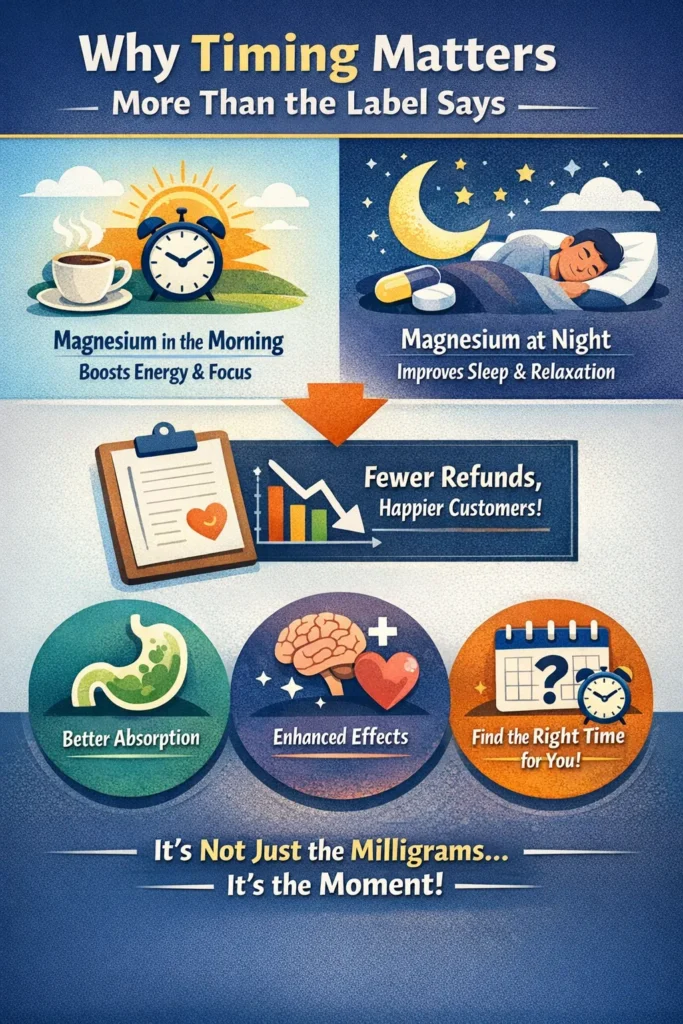
People love focusing on milligrams, but timing quietly runs the show. Your body reacts differently to magnesium depending on when you take it. Ever notice how coffee at night feels like a terrible life choice, but coffee in the morning feels heroic? Same logic applies here.
From a business standpoint, we saw fewer refunds when customers adjusted timing instead of switching products. That told me everything. Your routine controls absorption, effects, and side benefits more than the label ever will.
So before asking for “stronger magnesium,” ask a better question. When does your body actually want it?
Morning Magnesium: Calm Energy Without the Jitters
Who Morning Dosing Works For
Morning magnesium works well for people who deal with stress, muscle tightness, or digestive issues during the day. I’ve tested this personally while juggling supplier calls and customer emails before noon. Magnesium in the morning helped me stay calm without knocking me out.
Morning intake supports:
- Stress response and mood balance
- Muscle relaxation for active jobs
- Digestive regularity
People who drink coffee daily benefit here too. Magnesium can smooth out caffeine’s rough edges. Ever feel wired but tense after coffee? Yeah, magnesium can help with that.
When Morning Magnesium Backfires
Some people feel sleepy after magnesium, and morning dosing ruins productivity for them. If you yawn by 10 a.m., switch timing. Supplements should support your day, not sabotage it.
Afternoon Magnesium: The Underrated Middle Ground
Afternoon dosing doesn’t get enough love, which feels unfair. This timing works well for people who train, work physically demanding jobs, or hit mental burnout around 3 p.m. I recommended this window to warehouse staff and delivery partners, and feedback stayed surprisingly consistent.
Afternoon magnesium helps with:
- Post-workout muscle recovery
- Mental fatigue without sedation
- Evening stress buildup
This option avoids morning sluggishness and nighttime drowsiness overload. FYI, afternoon dosing also reduces digestive discomfort for people sensitive to magnesium.
Evening Magnesium: The Sleep-Friendly Favorite
Why People Love Nighttime Magnesium
Most customers associate magnesium with sleep, and for good reason. Evening dosing helps your nervous system slow down. When I added this option to customer education materials, sleep-related reviews doubled.
Night dosing supports:
- Relaxation before bed
- Sleep quality and duration
- Reduced nighttime muscle cramps
People who struggle with racing thoughts swear by this timing. Ever lie in bed replaying conversations from 2014? Magnesium helps quiet that mental noise.
When Night Dosing Causes Problems
Some magnesium forms upset the stomach. Taking them at night can trigger midnight bathroom runs, which nobody wants. If this happens, adjust the form or timing earlier in the evening.
Matching Magnesium Type With Timing
Not all magnesium acts the same, and pretending otherwise causes confusion. From a retail perspective, pairing form with timing reduced customer complaints fast.
Common Types and Ideal Timing
- Magnesium glycinate: Evening or night for relaxation and sleep
- Magnesium citrate: Morning or afternoon for digestion support
- Magnesium malate: Morning for energy and muscle support
- Magnesium oxide: Less absorbable, timing matters less
Form matters just as much as timing. I’ve seen people blame magnesium when the real issue came from using the wrong type at the wrong hour.
Best Time to Take Magnesium Based on Your Goal
Let’s get practical. You don’t need perfection; you need alignment. The best time to take magnesium depends on what you want most.
Goal-Based Timing Guide
- Better sleep: Evening or 1–2 hours before bed
- Stress control: Morning or afternoon
- Muscle recovery: Afternoon or post-workout
- Digestive support: Morning with food
Notice how no single answer wins every category? That’s not an accident. Supplements work best when they fit your lifestyle, not some influencer’s routine.
Best Time to Take Magnesium: Quick Comparison Table
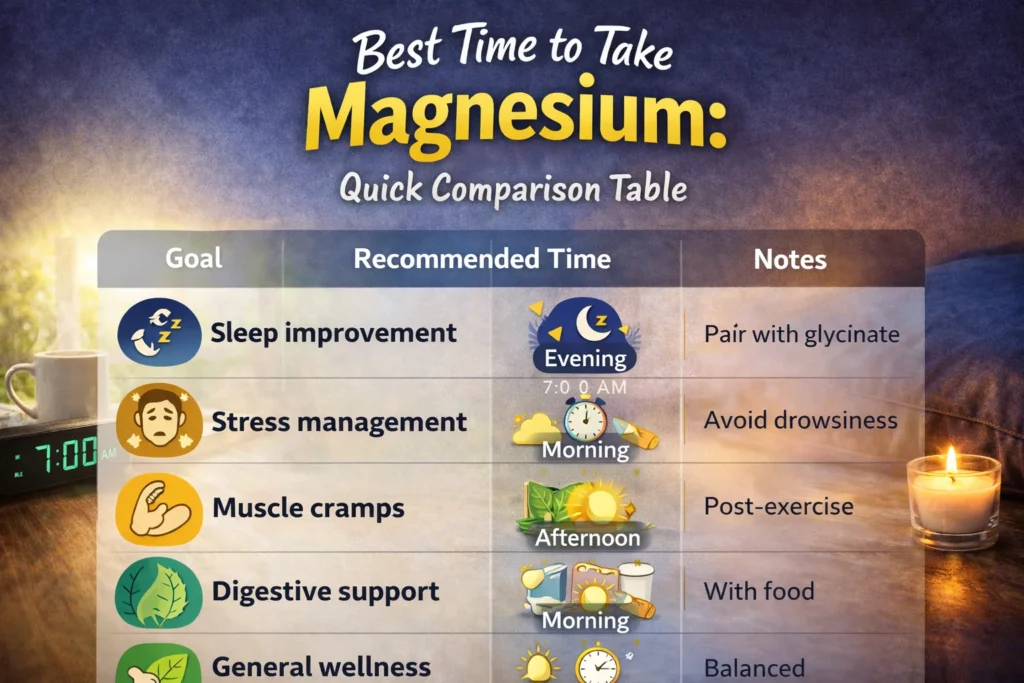
| Goal | Recommended Time | Notes |
|---|---|---|
| Sleep improvement | Evening | Pair with glycinate |
| Stress management | Morning | Avoid if it causes drowsiness |
| Muscle cramps | Afternoon | Works well post-exercise |
| Digestive support | Morning | Take with food |
| General wellness | Afternoon | Balanced effects |
This table mirrors what we share with first-time buyers. Simple guidance reduces confusion and builds trust.
Mistakes People Keep Making With Magnesium Timing
I see the same issues repeatedly, and honestly, they hurt results more than dosage errors.
Common mistakes include:
- Taking magnesium randomly
- Ignoring form differences
- Stacking with caffeine too late
- Expecting instant results
Supplements reward consistency, not impatience. Magnesium builds benefits over days, not minutes. Ever quit a gym after one workout? Same logic applies here.
Best Time to Take Magnesium for Busy Lifestyles
Busy schedules complicate everything. I get it. Between managing stock, payments, and logistics, perfection feels unrealistic. That’s why I tell customers this: pick a time you can stick to.
The best time to take magnesium becomes useless if you forget it daily. Consistency beats ideal timing every single time. Morning routines often stick better, while evening routines support sleep-focused goals.
Ask yourself one honest question. When will I actually remember this?
Frequently Asked Questions
What happens if I take magnesium at the wrong time?
Nothing dangerous usually happens, but results may feel weaker. Some people feel sleepy or get stomach discomfort. Adjust timing before blaming the supplement.
Can I split my magnesium dose?
Yes, splitting doses improves tolerance and absorption. Many customers saw better results by dividing morning and evening doses.
How long before I notice results?
Most people notice changes within 3 to 7 days. Sleep and muscle benefits often show first, while stress benefits build gradually.
Final Thoughts:
The best time to take magnesium doesn’t live on a label or blog checklist. It lives inside your routine, your goals, and your consistency. From running a wellness business, I’ve learned that timing fixes more problems than switching brands ever will.
Test one timing window for a week. Track how you feel. Adjust like a grown adult who listens to their body. Magnesium works quietly, but when you respect timing, it works beautifully.