
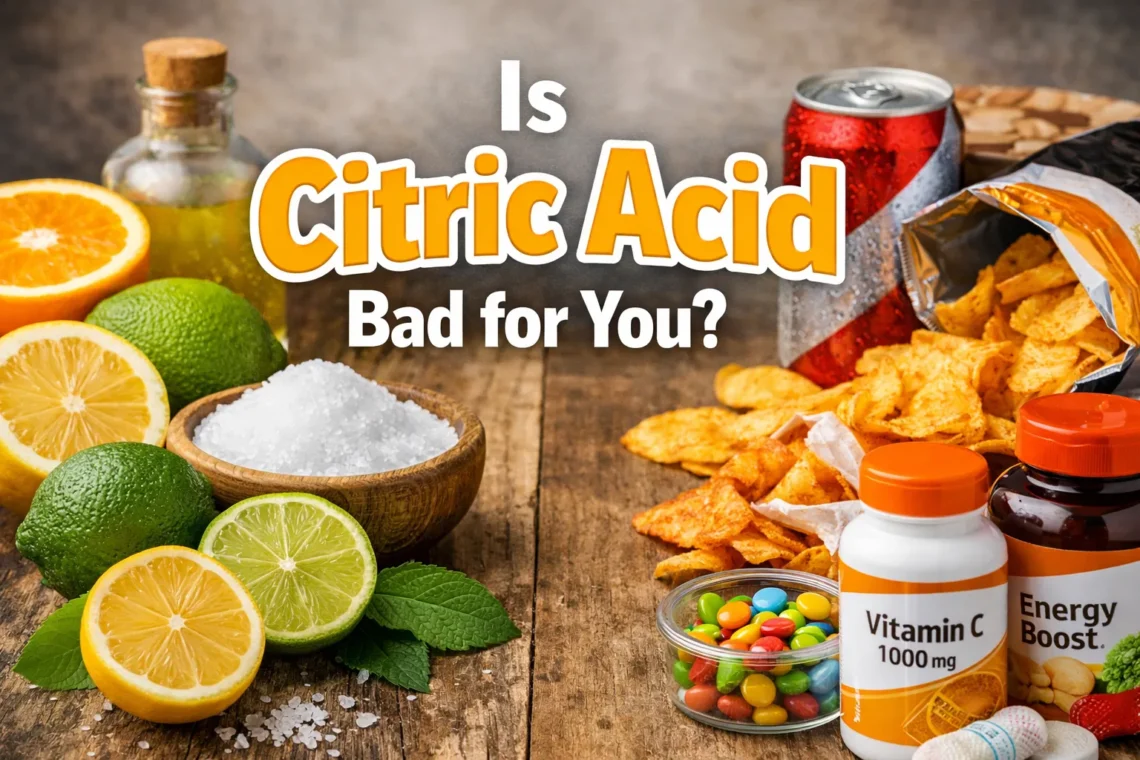
Ever flipped over a food label, spotted citric acid, and thought, “Wait… is citric acid bad for you?” You’re not alone. I ask that question all the time, especially when I review products from a business perspective and decide what actually deserves shelf space. So let’s have a real, no-BS conversation about this ingredient, without fear-mongering or marketing fluff.
I deal with ingredients daily, and citric acid pops up everywhere—from drinks to snacks to supplements. Some people panic. Others ignore it. So which camp makes sense?
What Exactly Is Citric Acid?
Citric acid comes from citrus fruits like lemons and limes. Nature uses it to create that sharp, tangy taste we all recognize instantly. Food manufacturers also produce it through fermentation, which keeps costs low and consistency high.
I’ve seen brands hype “natural citrus flavor” while still using lab-produced citric acid. FYI, the molecule stays the same either way. Your body doesn’t check its birth certificate.
Citric acid plays three main roles in food:
- Adds tart flavor
- Preserves freshness
- Balances pH levels
Simple job, big reputation.
Why Food Companies Love It (And Why I Get It)
From a business standpoint, citric acid makes life easier. It extends shelf life, stabilizes flavors, and reduces waste, which matters a lot when brands target diet-focused and weight loss friendly products. When I evaluate product margins, ingredients like this keep costs predictable while helping foods stay low-calorie, shelf-stable, and consistent.
That doesn’t mean companies use it out of kindness. They use it because it works, especially in products marketed toward clean eating, portion control, and calorie conscious diets. And honestly, I respect ingredients that pull their weight without drama.
But still, is citric acid bad for you when it shows up everywhere, even in foods people choose specifically for weight loss and healthier eating?
Is Citric Acid Bad for You in Normal Amounts?
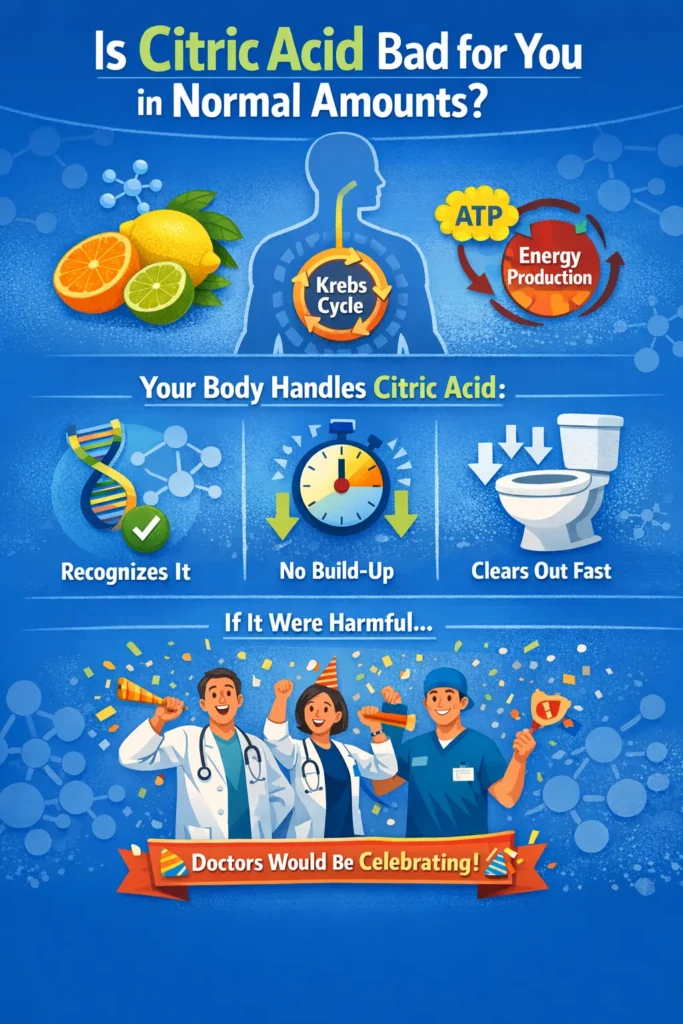
Short answer: for most people, no. Long answer: context matters.
Your body processes citric acid naturally. Your cells even use it in energy production through the Krebs cycle. That’s not wellness blog magic; that’s basic biology.
Most people tolerate citric acid well because:
- Your body already recognizes it
- It doesn’t accumulate
- It exits your system quickly
If citric acid caused widespread harm, the healthcare industry would throw a party. Spoiler: they haven’t.
When Citric Acid Can Actually Cause Issues
Here’s where nuance matters. Some people feel real discomfort, and I never dismiss that.
Digestive Sensitivity
People with acid reflux or sensitive stomachs may feel burning or irritation. That reaction doesn’t mean citric acid attacks everyone.
Tooth Enamel Concerns
Citric acid can weaken enamel if you sip acidic drinks all day. I’ve seen beverage brands ignore this and regret customer complaints later.
Rare Allergic Reactions
Very few people react to fermented citric acid. It happens, but it stays uncommon.
So yes, is citric acid bad for you if you already struggle with these issues? Possibly.
Natural vs Synthetic Citric Acid: Does It Matter?
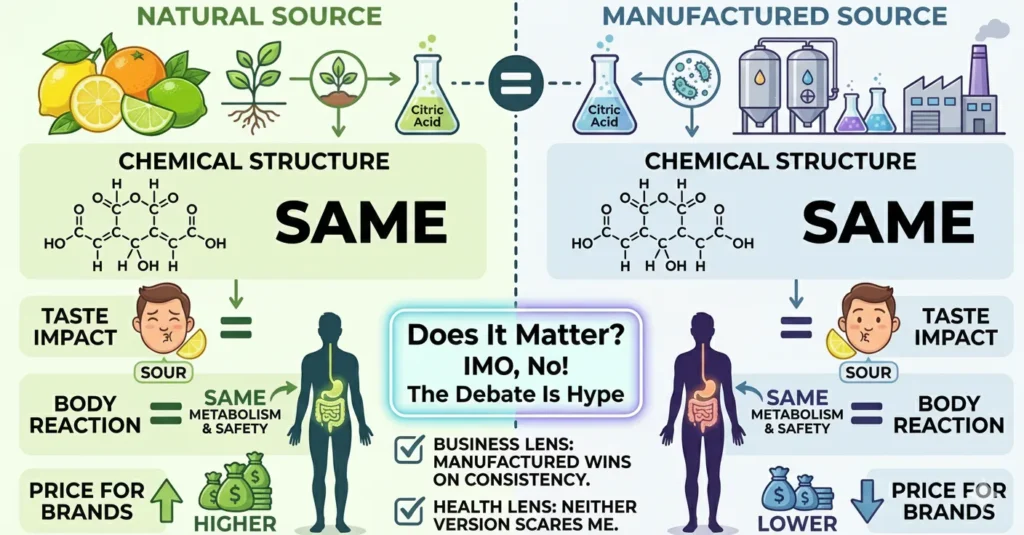
IMO, this debate gets way too much hype.
Chemically, both versions match. Your body doesn’t distinguish between lemon-derived and fermented citric acid. Marketing teams love pretending otherwise because “natural” sells.
Here’s a quick breakdown that actually helps:
| Factor | Natural Source | Manufactured Source |
|---|---|---|
| Chemical structure | Same | Same |
| Taste impact | Same | Same |
| Body reaction | Same | Same |
| Price for brands | Higher | Lower |
From a business lens, manufactured citric acid wins on consistency. From a health lens, neither version scares me.
Citric Acid in Drinks: The Real Villain?
People blame citric acid for problems that sugar and overconsumption cause. That feels unfair.
When I analyze drink formulations, I notice this pattern:
- High sugar causes crashes
- Excess caffeine spikes anxiety
- Citric acid gets blamed anyway
Citric acid doesn’t hijack your metabolism. It just sits there doing its job. Ever noticed how water with lemon feels refreshing while soda feels rough? Same acid, different context. Funny how that works, right?
Is Citric Acid Bad for You Long-Term?
This question matters more than short-term discomfort. I care about long-term trust when I build product lines.
Current evidence shows no link between citric acid and chronic disease. People consume it daily across cultures with zero patterns of long-term damage.
Long-term safety looks solid because:
- Your body metabolizes it efficiently
- It doesn’t bioaccumulate
- It exists naturally in foods you already eat
So when someone asks me is citric acid bad for you in the long run, I say no—with confidence.
Citric Acid vs Other Food Additives
If we rank additives by concern level, citric acid sits near the bottom.
Compare it to:
- Artificial dyes
- Trans fats
- Excess sodium
- High-fructose corn syrup
Citric acid looks like the polite guest who cleans up before leaving. I’d choose it over most additives any day.
Common Myths That Need to Chill
Let’s clear up some nonsense I hear way too often.
Myth 1: Citric acid equals synthetic poison
Truth: Your body already uses it daily.
Myth 2: It destroys gut health
Truth: Overuse of acidic junk does that, not citric acid alone.
Myth 3: Natural versions always mean safer
Truth: Chemistry doesn’t care about vibes.
Honestly, misinformation sells better than facts. That annoys me as both a consumer and business owner.
Who Should Limit Citric Acid Intake?
I don’t believe in blanket rules, but some people should stay cautious.
Consider limiting citric acid if you:
- Have severe acid reflux
- Struggle with enamel erosion
- Notice consistent irritation after acidic foods
Listen to your body, not internet panic.
Quick FAQ: Straight Answers Only
Is citric acid bad for you if you eat it daily?
No. Most people consume it daily without issues. Problems usually come from excessive acidic drinks or sugar, not the acid itself.
Can citric acid cause inflammation?
Citric acid doesn’t cause inflammation directly. Existing conditions may feel worse after acidic foods, but the ingredient doesn’t create inflammation on its own.
Should kids avoid citric acid?
Kids can safely consume citric acid in normal foods. Just limit sugary acidic drinks to protect teeth.
Final Thoughts: So… Is Citric Acid the Enemy?
After years of evaluating ingredients, managing customer feedback, and actually reading labels, I don’t lose sleep over citric acid. The fear feels overblown, and the science stays calm.
So when someone asks me is citric acid bad for you, I answer honestly: not for most people, not in normal amounts, and not compared to bigger dietary problems.
Focus on balance. Drink water. Brush your teeth. Stop blaming the wrong ingredient. Your body—and your grocery bill—will thank you.