Okay, let’s get real for a second. You’re going about your day, you pop into the bathroom, and bam—there it is. A little unexpected bit of spotting before period is on the scene. Your brain immediately does that lovely internal panic spiral: “Is this my period starting early? Am I pregnant? Is my body just trolling me for funsies?” First, take a deep breath. You’re not alone, and this is incredibly common. I’ve lost count of the number of conversations we’ve had with folks who are just looking for straight talk on this very topic of spotting before period.
So, let’s cut through the noise and chat about what’s up with pre-period spotting, what it might mean, and when you might want to raise an eyebrow (or actually call your doctor).
What Even Is Spotting, Anyway?
Let’s define our terms, because “spotting” can sound vague. We’re not talking about your full-blown, need-a-tampon period flow. Spotting before period is that light, minimal bleeding that doesn’t require much, if any, protection. Think:
- A few drops of blood on your underwear.
- Light pink or brown discharge when you wipe.
- It doesn’t follow the “rules” of your usual period schedule or flow.
It’s like your uterus sending a cryptic text message instead of having a full conversation. Annoying? Absolutely. Always a crisis? Nope.
The Usual Suspects: Common Causes of Pre-Period Spotting
Most of the time, spotting before period is due, literally a few days prior, is just your body doing its weird, hormonal thing. Hormones are the ultimate chaotic managers—sometimes they nail the schedule, other times they’re just winging it. Here are the typical culprits behind the scene.
Hormonal Fluctuations (The Classic)
This is the MVP reason. Right before your period, estrogen and progesterone take a nosedive to kickstart your menstrual flow. Sometimes, that drop isn’t a smooth elevator ride down; it’s more of a jerky staircase. This can cause the uterine lining to shed just a tiny bit prematurely. Think of it as your period’s awkward preview trailer.
Ovulation (But Later Than You’d Think)
“Wait, ovulation is mid-cycle!” you say. You’re right! But sometimes, especially if you have a longer cycle or your ovulation was delayed, that small dip in estrogen after the egg is released can cause what’s called “ovulation spotting.” It just shows up later, masquerading as spotting before period. Sneaky, right?
Your Birth Control’s Side Hustle
Starting a new hormonal birth control? Switching methods? Even being on the pill for years? This is a huge one. These methods work by controlling your hormones, and sometimes that control includes sending a bit of “breakthrough bleeding” as a RSVP. It’s usually your body adjusting. IMO, if it’s a new method, give it 3-4 months to settle. If spotting before period persists, a chat with your doc is a good move.
Life, Stress, and Your Body’s Rebellion
Pulled a bunch of all-nighters? Having a monstrous month at work? Training for a marathon? Your body feels that stress big time, and it can directly impact your hypothalamic-pituitary-ovarian axis (try saying that three times fast). Basically, high stress can delay ovulation, which then throws your whole cycle timing—and bleeding—out of whack, leading to unexpected spotting before period.
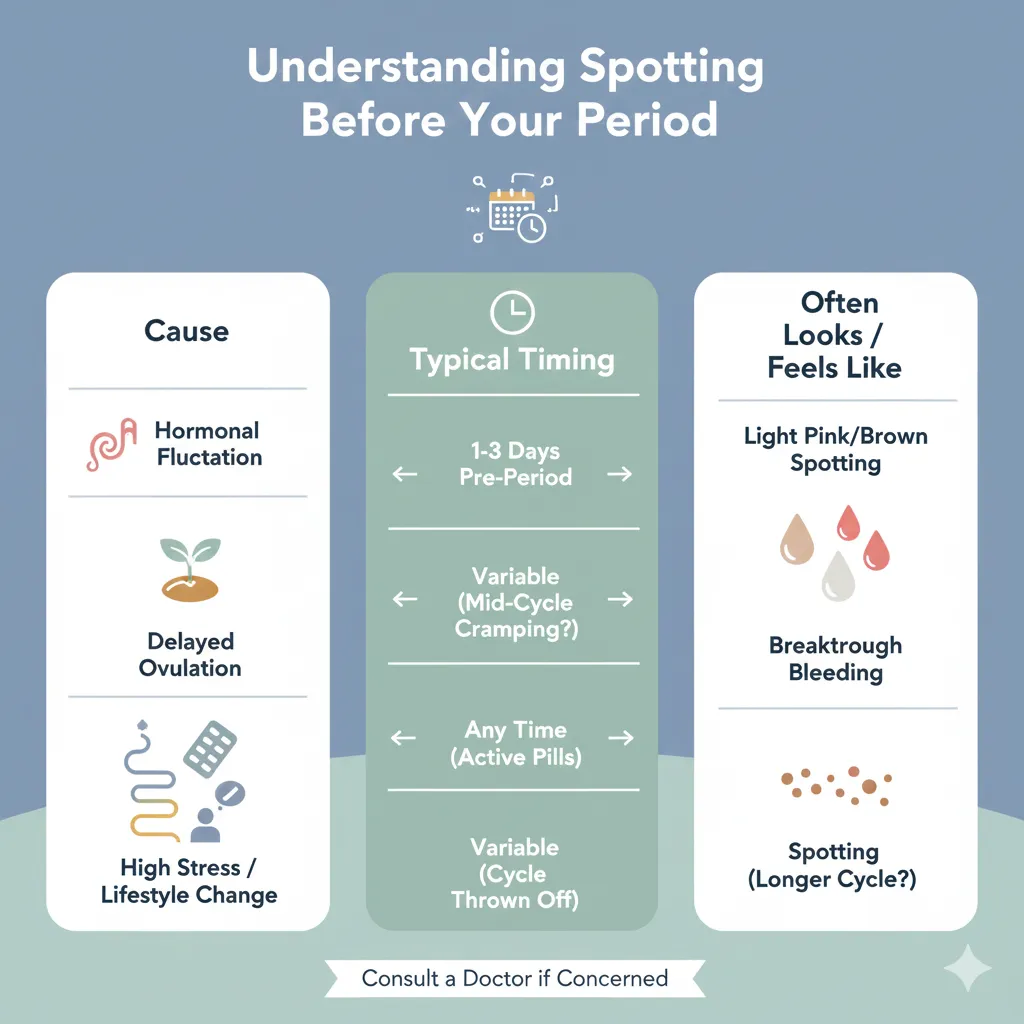
To make this easier, here’s a quick-reference table for the common, usually benign causes:
| Cause | Typical Timing | What It Often Looks/Feels Like |
|---|---|---|
| Hormonal Fluctuation | 1-3 days before expected period | Light pink or brown spotting; no other symptoms. |
| Delayed Ovulation | Variable, can seem “pre-period” | Very light spotting, may have had mild cramping mid-cycle. |
| Birth Control | Any time, especially on active pills | Breakthrough bleeding; can be light red or brown. |
| High Stress or Lifestyle Change | Variable, throws off cycle timing | Spotting before period when you think it’s due, but cycle may be longer. |
The Big Question: Is This Spotting or Implantation Bleeding?
Ah, the question that fuels a million internet searches. Let’s demystify this. Implantation bleeding happens when a fertilized egg attaches to your uterine lining, about 6-12 days after ovulation. If you have a textbook 28-day cycle, that could be right around when you’re expecting your period.
So how can you possibly tell the difference from typical spotting before period? It’s tricky, but look for these clues:
- Timing: Implantation bleeding often occurs slightly earlier than your expected period.
- Duration: It’s typically very short—a few hours to a couple of days max.
- Flow & Color: It’s usually super light (only noticeable when wiping) and tends to be light pink or brown, rarely red.
- Symptoms: You might have very mild cramping, unlike your usual stronger period cramps.
The brutal truth? You often can’t tell for sure based on symptoms alone. The only definitive answers come from taking a pregnancy test (after your missed period) or getting a blood test from your doctor. So, save yourself the obsessive googling about spotting before period and just wait a few more days for a test. FYI :/
When Should You Actually Start to Worry?
While spotting before period is usually NBD, it can sometimes wave a little red flag. We’re not here to fear-monger, but we are here to advocate for listening to your body. Make that call to your healthcare provider if your spotting is accompanied by:
- Severe pain or cramping that’s new or worse than usual.
- Foul-smelling discharge along with the spotting.
- Spotting before period that happens every single cycle and is new for you.
- Heavy bleeding that soaks through a pad/tampon in an hour—that’s not spotting, that’s a heavy flow.
- Spotting after sex that happens consistently.
- You’re over 45 and experiencing new spotting patterns, which could relate to perimenopause.
Your gut feeling is valid. If something feels “off” to you, even if it’s not on this list, getting checked out is always the right move. Peace of mind is priceless.
How Tracking Can Be Your Best Friend
Wanna feel more in control of understanding your spotting before period? Start tracking. Not just your period start and end dates, but the nitty-gritty:
- Spotting episodes (color, flow, how many days before period?)
- Other symptoms (cramps, mood, energy, cervical mucus)
- Life factors (stress levels, sleep, major travel, illness)
After a few cycles, you might see a pattern. Maybe you always spot a day before your full flow starts. Maybe it only happens when you’re super stressed. This info is pure gold for your own understanding and for any conversation with your doctor. It changes the chat from “I sometimes spot” to “I consistently experience light brown spotting before period for two days prior to my heaviest flow day.” See the difference? You become the expert on your own body.
FAQs
Let’s hit three of the most common questions we hear all the time.
1. Is spotting before my period normal?
In a word: often. For many people, spotting before period is a regular, harmless part of their cycle influenced by normal hormonal shifts. If it’s a one-off or a consistent pattern without other worrying symptoms, it’s usually considered normal. But “common” doesn’t always mean “normal for you,” so noting any changes is key.
2. Can stress really cause spotting before period?
Absolutely, 100%. Chronic high stress floods your system with cortisol, which can directly interfere with the hormones that regulate your cycle. This can delay ovulation, thin your uterine lining, and cause unexpected spotting before period. So yes, that hell-project at work could literally be bleeding into your life (sorry, I had to).
3. When should I take a pregnancy test if I’m spotting?
The best practice is to wait until the first day of your missed period for the most accurate result. If you have irregular cycles, wait at least 2-3 weeks after the unprotected sex in question. Testing too early can give you a false negative. If the spotting before period was actually implantation bleeding, a test should turn positive around the time your period is due.
Conclusion:
So, where does this leave us? Spotting before your period is usually your body’s quirky, hormonal way of keeping you on your toes. It’s rarely a five-alarm fire, but it is a sign worth paying attention to. Track it, learn its patterns for your own body, and never hesitate to partner with a healthcare pro if your intuition sounds the alarm. Our bodies are amazing, complex, and occasionally baffling systems. The goal isn’t to achieve a “perfect,” symptom-free cycle—that’s a fantasy. The goal is to understand your own unique rhythm, including any spotting before period, so you can spend less time worrying in the bathroom and more time living your life. Now, go on. You’ve got this.